Every job below is one we do ourselves across Rancho Cucamonga.
We build new decks from the footings up, using concrete piers set below grade and joists sized for the actual load, not just code minimum. Framing gets galvanized or stainless hardware throughout, since the dry heat here and the occasional downpour both work against cheap fasteners. We can frame a simple rectangle off the back door or a multi-level layout that steps down with the yard.
Most repair calls start with a soft spot underfoot, a post that's shifted, or a railing that wiggles when you lean on it. We pull the bad boards or hardware, check the framing underneath for rot or termite damage, and rebuild only what's actually failed. A repair doesn't always mean tearing out the whole deck, but we'll tell you straight if it does.
Sun in the Inland Empire fades and dries out wood decking faster than most people expect, usually within two to three years of the last coat. We pressure wash first, let the wood dry fully, then apply a penetrating stain and sealer rated for UV exposure. Skipping this step is how boards start cupping and splitting.
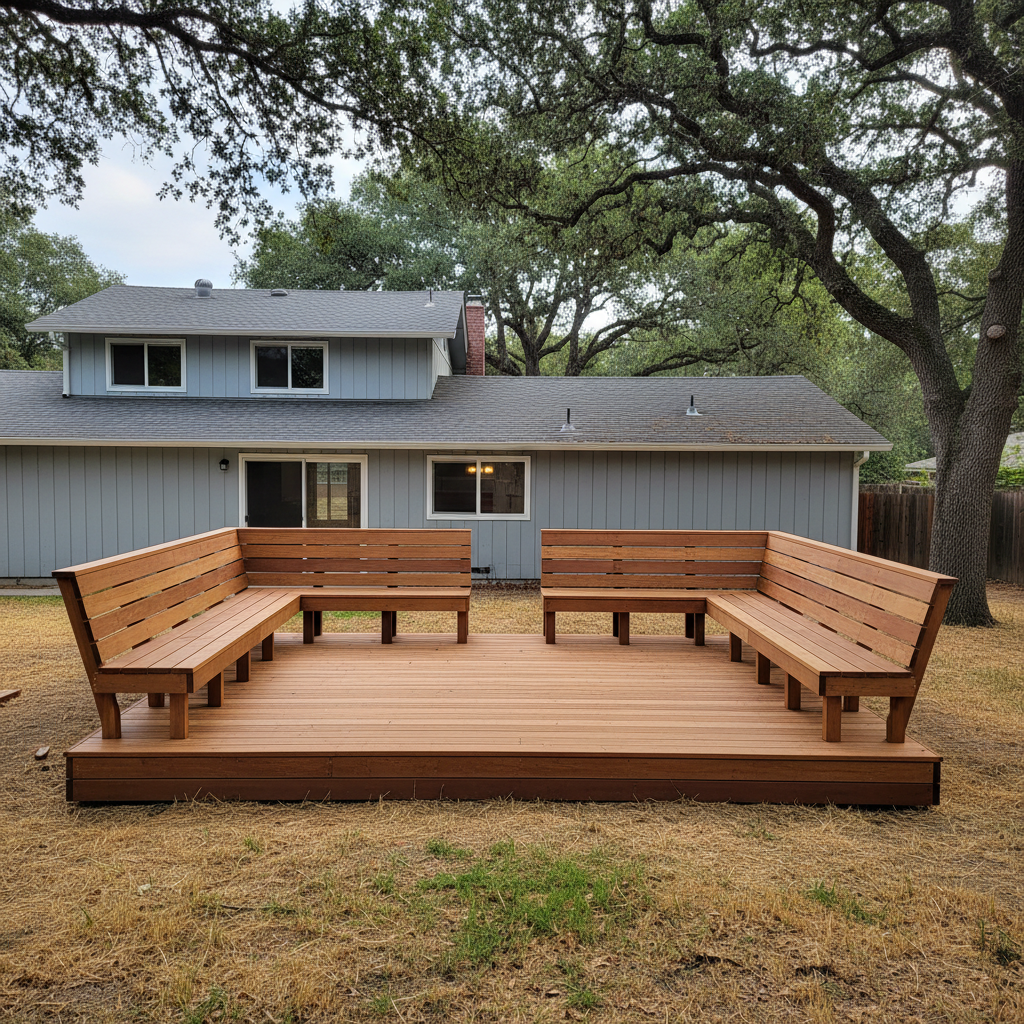
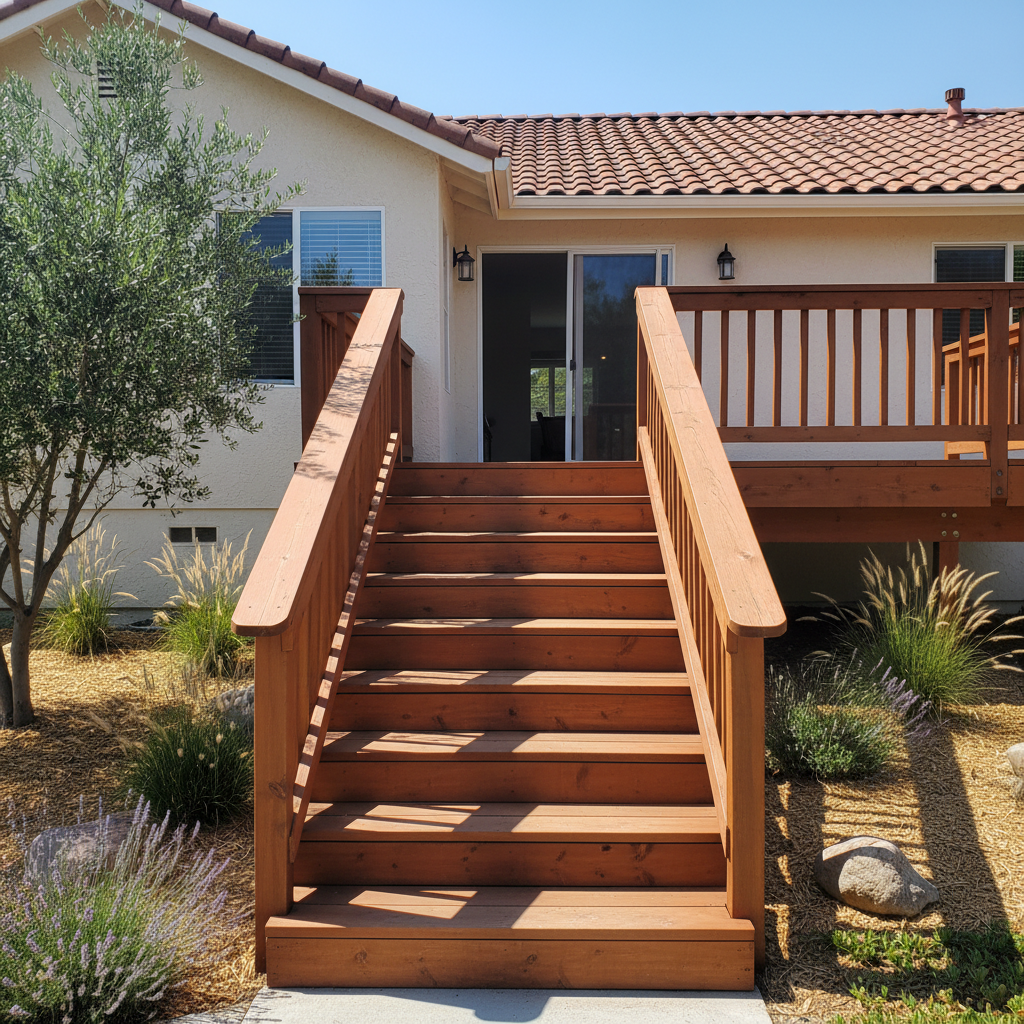
We'll talk through how you actually use your backyard before drawing anything, built-in bench seating, a pergola over part of it, stairs that land where you actually walk. Multi-level decks get engineered separately for each level's load path. Layout decisions get made on paper, not figured out halfway through framing.
Composite boards don't need restaining, don't splinter, and hold up better than wood against the California sun over the long run. They do need proper joist spacing underneath, usually 12 or 16 inches on center depending on the brand, or the boards will sag between supports. We install Trex, TimberTech, and a few other lines depending on what you're after.
This is the part under the boards that nobody sees until something's wrong, ledger connections, joist hangers, posts and footings. A ledger board nailed instead of lag-bolted or flashed is the single most common failure point we find on older decks. We re-flash, re-bolt, and bring footings up to current code when we touch structural work.
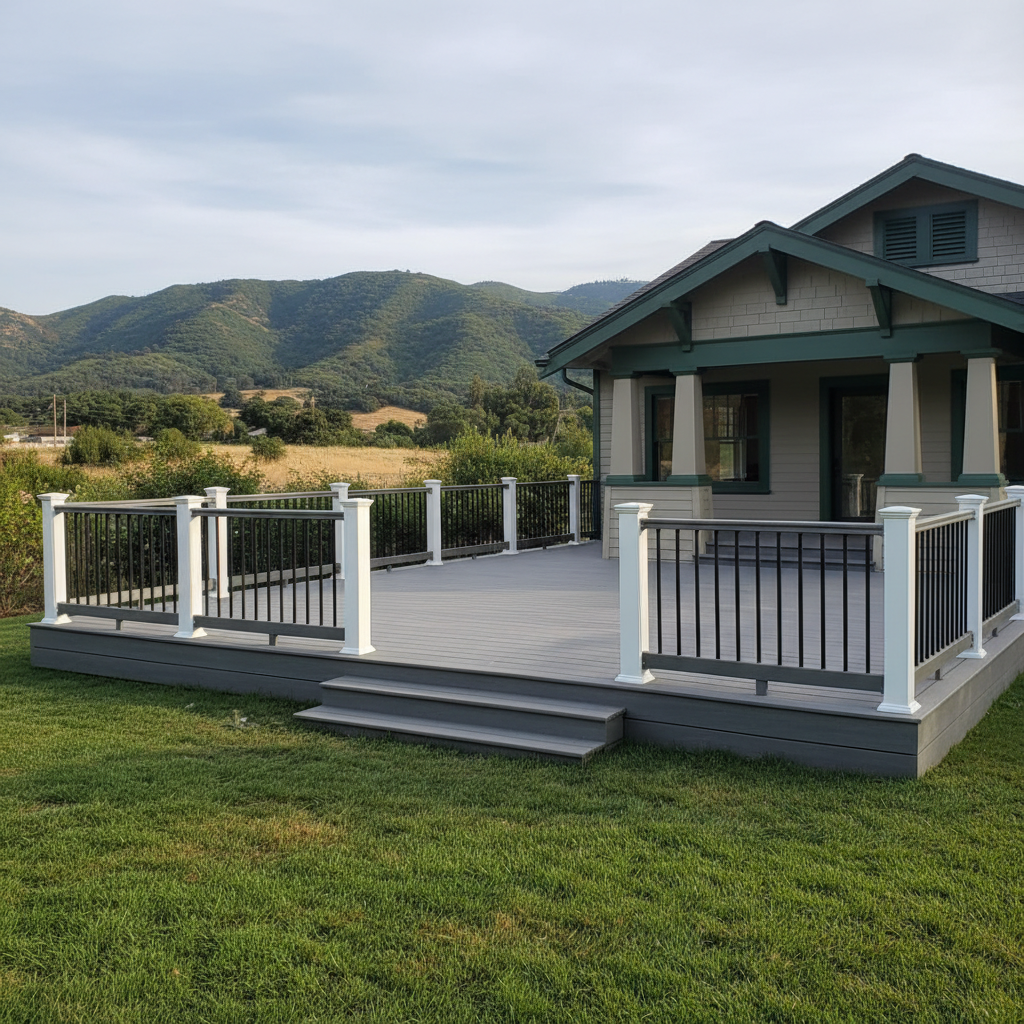
California code calls for guardrails at 36 to 42 inches with baluster spacing under 4 inches, and a lot of older decks don't meet either number anymore. We build and install railings that pass inspection and don't flex when someone leans on them. Cable rail, wood baluster, or metal panel, whatever fits the look of the house.
If the frame underneath is still solid but the decking itself has had it, we strip the old boards and lay new decking over the existing structure. This costs less than a full rebuild and takes a fraction of the time. We check joist spacing first, since older framing sometimes needs sistering before new boards go down.
A lot of decks in this area get more use with some shade over at least part of them. We build pergolas and covers that attach to the existing deck framing or stand on their own footings, depending on what the structure underneath can actually handle.
Sometimes the right move is tearing the old deck out and starting over, especially if the framing's rotted past the point of patching. We haul off the old lumber and sweep the site for stray nails before any new footings go in.
Four steps, and no surprises in any of them.
You tell us what you want doing, we look at what is actually there, and we ask the awkward questions early.
In writing, itemised, free. If something might add cost later we flag it now rather than at the end.
Same crew throughout. We cover your floors, keep the dust down and tidy up before we leave each day.
You point out anything you are not happy with and we fix it before the invoice, not after.
Deck work is scheduled by drive time, so check if your city is on the list.
Questions that come up once a deck project is actually underway.
Describe the problem and we will tell you what it probably is. No obligation.